
The Silent Revolution Beyond the Cloud
As CES 2026 fades from the headlines, the true story isn’t just about the flashy consumer gadgets—it’s about the quiet, powerful hardware revolution reshaping enterprise AI. While AI headlines have long been dominated by massive, cloud-based models, a decisive shift is underway. The emergence of optimized local AI hardware, sophisticated offline-first frameworks, and growing data sovereignty mandates are converging to make 2024 the year on-premise AI transitions from niche alternative to essential strategy.
For businesses contemplating post-holiday hardware upgrades, this presents more than just a refresh cycle—it’s an opportunity to build competitive, resilient, and truly sovereign intelligence infrastructure. This article explores why running models locally is becoming more critical than ever and how recent technological advancements make this not just feasible, but strategically imperative.
The Hardware Revolution: From Data Centers to Desktop Power
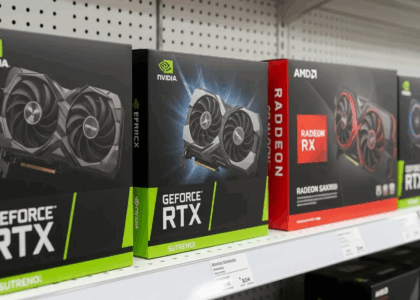
CES 2026 showcased what industry insiders have anticipated for months: consumer-grade hardware now delivers what required server racks just years ago. NVIDIA’s latest RTX 50-series cards feature dedicated AI tensor cores optimized for local inference, while AMD’s Ryzen AI 800-series processors integrate neural processing units (NPUs) capable of running billion-parameter models efficiently.
But the real story isn’t just raw specifications—it’s the optimization ecosystem that has matured around this hardware. Consider the advancements in local AI deployment tools:
- Ollama 2026 Edition: Now features hardware-aware model quantization that automatically optimizes for specific GPU/CPU combinations, reducing model size by 40-60% with minimal accuracy loss
- llama.cpp Enhancements: CUDA and ROCm backends that leverage every ounce of GPU potential, with particular optimizations for NVIDIA’s latest architectures
- Windows AI Stack: Microsoft’s deep integration of local AI runtime into Windows 12 creates a seamless environment for enterprise applications
These developments matter because they fundamentally change the economics of AI deployment. What previously required six-figure infrastructure investments now runs on workstations costing less than $5,000.
Five Strategic Imperatives Driving the Local AI Shift
- Data Sovereignty and Regulatory Compliance
Global data protection regulations have evolved beyond GDPR. The 2025 EU AI Act, China’s Data Security Law, and sector-specific regulations in finance and healthcare increasingly mandate data locality. Cloud-based AI that processes sensitive information across borders creates untenable compliance risk.
Example: A European healthcare provider using local AI for patient record analysis maintains compliance with both medical privacy laws and AI regulations, while a cloud-based alternative would face prohibitive legal hurdles.
- Latency-Free Real-Time Processing
Certain applications simply cannot tolerate the round-trip delay to cloud servers. Industrial automation, financial trading algorithms, and real-time translation systems require sub-20-millisecond response times—physically impossible with cloud architectures for many geographic locations.
- Predictable Cost Structures
While cloud AI services operate on consumption-based pricing that scales unpredictably with usage, local AI transforms costs from operational expenditure to predictable capital expenditure. For sustained AI workloads, the break-even point now occurs within 12-18 months for most mid-sized implementations.
- Enhanced Security Posture
Every data transfer to the cloud represents a potential vulnerability. Local AI minimizes the attack surface by keeping sensitive data within organizational boundaries. In an era of sophisticated AI-driven cyber threats, this containment strategy provides defense-in-depth advantages.
- Operational Resilience
Natural disasters, regional internet outages, or cloud service interruptions no longer equate to complete AI functionality loss when critical models run locally. This resilience is increasingly valued in business continuity planning.
Practical Implementation: What Changed in 2024-2025?
The theoretical advantages of local AI aren’t new—what changed is practical implementation. Several key developments removed previous barriers:
Model Efficiency Breakthroughs:
- Mixture-of-Experts (MoE) Architectures: Smaller, specialized models that activate only relevant neural pathways, reducing computational requirements by 70%+ while maintaining capability
- 4-bit and 5-bit Quantization: Advanced techniques that minimize precision loss while dramatically shrinking model footprints
- Architectural Specialization: Models specifically designed for vertical applications (legal, medical, engineering) that outperform generalist models on domain tasks despite smaller size
Tooling Maturation:
| # Simplified 2026 local deployment vs. 2023 approach
# 2023: Complex, fragile deployment import torch from transformers import AutoModelForCausalLM model = AutoModelForCausalLM.from_pretrained(“big-model”) # … extensive optimization code needed # Result: Often unstable, required specialized expertise
# 2026: Hardware-optimized, one-command deployment ollama run llama3.2:latest –gpu –optimize-for “rtx5090” # Automatic hardware detection and optimization # Result: Production-ready in minutes |
Enterprise Management Ecosystems:
Modern local AI isn’t about running a single model on a single machine. Solutions like LocalAI Orchestrator and On-Prem AI Manager provide:
- Centralized model deployment and version control across facilities
- Usage monitoring and cost allocation
- Automated model updating and security patching
- Hybrid deployment management (splitting workloads between local and cloud)
Post-Holiday Hardware Upgrade Guide: Building Your Local AI Foundation
For businesses planning hardware refreshes, consider these configurations:
| Use Case | Recommended Configuration | Cost Range | Key Capabilities |
| Individual Developer | RTX 5080 + 64GB RAM + Ryzen AI 8900X | $3,500-$4,500 | Run 70B parameter models at usable speeds |
| Small Team Server | Dual RTX 5090 + 128GB RAM + Threadripper Pro | $8,000-$12,000 | Serve 20+ concurrent users with 7B-40B models |
| Departmental Deployment | NVIDIA AI Workstation (RTX 6000 Ada x2) + 256GB RAM | $15,000-$25,000 | Multiple large models simultaneously, training fine-tunes |
| Edge Industrial | Ruggedized AI Appliance with RTX 5000 Mobile | $7,000-$10,000 | Factory floor deployment, real-time quality control |
Critical Implementation Insights:
- Memory is King: Beyond GPU specifications, system RAM directly determines which models you can run. For serious work, 64GB should be considered minimum, with 128GB recommended.
- Storage Matters: Modern AI workflows involve rapid switching between models. NVMe Gen5 storage dramatically reduces loading times.
- Cooling Requirements: Sustained AI inference generates continuous thermal load—often exceeding gaming or traditional compute workloads. Plan cooling solutions accordingly.
- Software Considerations: Hardware is only half the equation. Budget for enterprise AI management software and potential consulting for initial deployment.
The Road Ahead: Local AI in Your 2026 Strategy
As we progress through 2026, expect several trends to accelerate the local AI movement:
- Vertical-Specific Hardware: Specialized chips optimized for particular industries (healthcare imaging analysis, financial risk modeling)
- Federated Learning Maturation: Truly private collaborative AI where models improve through cross-organization learning without data sharing
- Edge-to-Cloud Orchestration: Intelligent workload distribution that dynamically shifts between local and cloud based on sensitivity, urgency, and cost factors
- AI-Native Operating Systems: Systems fundamentally redesigned around AI workflows rather than retrofitting AI onto existing architectures
Conclusion: Building Sovereign Intelligence
The AI landscape in 2026 presents a clear divergence: one path continues the cloud-centric approach with its attendant dependencies, while another builds sovereign intelligence capabilities directly within organizational control. For enterprises, this isn’t merely a technical decision—it’s a strategic positioning that affects competitiveness, resilience, and regulatory compliance.
The convergence of hardware advancements, software optimization, and regulatory pressures has created a unique window for organizations to establish local AI capabilities. Those who leverage this post-holiday upgrade season to build their foundation will enter 2026 with capabilities that cannot be replicated through cloud subscriptions alone—they’ll own their intelligence infrastructure.
As CES 2026 demonstrated, the tools are now here. The question is no longer whether local AI is viable, but how quickly organizations can implement it to gain first-mover advantage in this new era of distributed, sovereign intelligence.
LocalArch AI helps enterprises design and implement sovereign AI infrastructure. Contact us for a personalized assessment of your local AI readiness and implementation roadmap.