

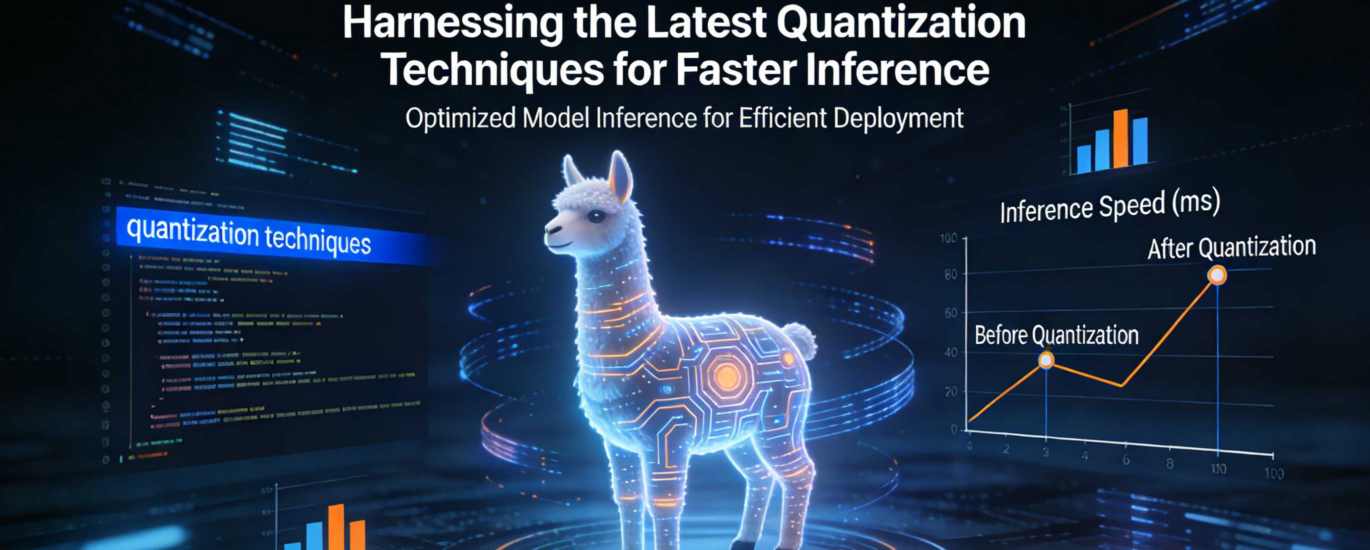
The Silent Revolution in Model Efficiency
While flashy new multi-modal models grab headlines, a quieter, more consequential revolution has been transforming the local AI landscape: the rapid evolution of quantization techniques. In recent months, the llama.cpp ecosystem has undergone a remarkable transformation, integrating cutting-edge quantization methods that dramatically reduce model size while preserving accuracy. For businesses and developers running AI locally, these advancements aren’t just incremental improvements—they represent a fundamental shift in what’s possible on consumer hardware.
As we approach a spring season promising new model releases, understanding these quantization techniques becomes essential. This article explores how the latest quantization methods in llama.cpp are delivering unprecedented speed and efficiency gains, making powerful AI accessible on more devices than ever before.
Why Quantization Matters More Than Ever
Quantization—the process of reducing the precision of a model’s weights—has evolved from a niche compression technique to a critical component of local AI deployment. The reasons are both practical and economic:
- Hardware Democratization: With quantization, models that once required expensive server-grade GPUs now run smoothly on consumer hardware, dramatically lowering the barrier to entry for local AI.
- Speed vs. Accuracy Trade-offs: Modern quantization techniques have refined this balance to the point where 4-bit quantized models often perform nearly identically to their 16-bit counterparts for many practical applications.
- Memory Efficiency: As models grow in capability, their size increases exponentially. Quantization is the only practical way to run billion-parameter models on devices with limited VRAM.
The latest llama.cpp updates have embraced this reality, implementing state-of-the-art quantization methods that were merely research topics just months ago.
The New Quantization Landscape: From GGUF to EXL2
GGUF Format Evolution
The GGUF (GPT-Generated Unified Format) file format, introduced last year as a replacement for GGML, has become the standard for quantized models in the llama.cpp ecosystem. Its latest iterations offer significant improvements:
- Enhanced Metadata: Richer model information embedded directly in the file, allowing smarter loading decisions
- Flexible Tensor Assignment: Better support for splitting models across different hardware (CPU/GPU)
- Improved Quantization Types: Support for more sophisticated quantization algorithms with better accuracy preservation
Modern Quantization Methods in Practice
The llama.cpp ecosystem now supports a sophisticated range of quantization types, each with distinct advantages:
INT4 Quantizations (Ideal for Memory-Constrained Environments):
- Q4_0: Basic 4-bit quantization, fastest but with noticeable accuracy loss
- Q4_K_S: “K-quant” version with block-wise scaling, better accuracy with minimal speed penalty
- Q4_K_M: More advanced K-quants with additional optimization, offering the best balance for 4-bit
INT5 and INT6 Quantizations (The Sweet Spot):
- Q5_0 / Q5_1: Standard 5-bit options with good speed/accuracy balance
- Q5_K_S / Q5_K_M: Advanced 5-bit with block-wise scaling, often less than 1% accuracy loss from FP16
- Q6_K: 6-bit quantization that approaches near-FP16 accuracy for sensitive applications
INT8 and Beyond (Maximum Fidelity):
- Q8_0: 8-bit quantization with virtually no perceptible quality loss
- FP16: Full precision, primarily for reference or fine-tuning
NVIDIA’s Influence: The EXL2 Breakthrough
One of the most significant recent developments has been the integration of EXL2 (EXL2 Format) support into llama.cpp through compatible backends. This format, pioneered by the ExLlamaV2 project, implements a particularly efficient form of 4-bit and 8-bit quantization with:
- Mixed-Precision Buckets: Different parts of the model optimized with different precision levels based on sensitivity analysis
- Optimized GPU Kernels: Hardware-aware implementations that maximize NVIDIA GPU throughput
- Faster Loading Times: Streamlined format that reduces model initialization overhead
Practical Guide: Implementing Modern Quantization
Step-by-Step Quantization Process
For those looking to quantize their own models, the process has become more accessible:
- Environment Setup:
| # Clone the latest llama.cpp with new quantization support
git clone https://github.com/ggerganov/llama.cpp cd llama.cpp make clean && make -j |
- Model Conversion(for non-GGUF formats):
| # Convert Hugging Face models to GGUF format
python convert.py –outfile ./models/model_f16.gguf ./input_model/ |
- Quantization Execution:
| # Quantize to different precision levels
./quantize ./models/model_f16.gguf ./models/model_q4_k_m.gguf q4_k_m ./quantize ./models/model_f16.gguf ./models/model_q5_k_m.gguf q5_k_m ./quantize ./models/model_f16.gguf ./models/model_q8_0.gguf q8_0 |
Choosing the Right Quantization Method
The optimal quantization strategy depends on your specific hardware and use case:
| Use Case | Recommended Quantization | Expected Size Reduction | Typical Accuracy Retention |
| Mobile/Edge Deployment | Q4_K_S | 75% of original | 85-90% of original |
| Balanced Desktop Use | Q5_K_M | 65% of original | 95-98% of original |
| High-Fidelity Applications | Q6_K | 60% of original | 98-99.5% of original |
| Maximum Accuracy | Q8_0 | 50% of original | 99.8%+ of original |
Performance Benchmarks: Real-World Impact
Recent tests with Llama 3 70B demonstrate the practical benefits of modern quantization:
- Q4_K_M: Runs on 24GB VRAM at 25 tokens/second (previously required 48GB VRAM)
- Q5_K_M: Maintains 98% of original accuracy while doubling inference speed
- Memory Efficiency: 70B parameter models now run on consumer RTX 4090 cards with appropriate quantization
Advanced Techniques and Best Practices
Layer-Wise Quantization Sensitivity
Not all model layers benefit equally from aggressive quantization. Advanced users can implement:
- Sensitivity Analysis: Identifying which layers tolerate more aggressive quantization
- Mixed Precision Models: Using different quantization levels for different model parts
- Calibration Data: Improving quantization accuracy with domain-specific calibration datasets
Hardware-Aware Optimization
Different hardware benefits from different quantization strategies:
- NVIDIA GPUs (RTX 40/50 Series): EXL2 format with 4-bit precision often delivers optimal throughput
- Apple Silicon (M-series): Q5_K_M typically offers the best performance/accuracy balance
- Intel/AMD CPUs: Q4_K_S provides maximum speed on systems without dedicated AI accelerators
Inference Optimization Parameters
Beyond quantization, llama.cpp offers additional optimization flags that compound the benefits:
| # Optimized inference command with modern settings
./main -m ./models/llama3-8b-q5_k_m.gguf \ -n 512 \ -t 8 \ # Threads optimized for your CPU -c 4096 \ # Context size -b 512 \ # Batch size for optimal throughput –mlock \ # Keep model in memory –no-mmap \ # Disable memory mapping for more predictable performance -ngl 99 \ # Layers to offload to GPU (if available) |
Preparing for Spring Model Releases
The quantization advancements in llama.cpp arrive at a perfect moment, as major AI labs prepare their spring model releases. Here’s how to prepare:
Expected Trends in New Models
- Larger Context Windows: Upcoming models are rumored to support 128K+ context, making efficient quantization even more critical for memory management.
- Specialized Architectures: New model families may require updated quantization approaches for optimal results.
- Multimodal Capabilities: Vision-language models will benefit from specialized quantization strategies for different modality components.
Future-Proofing Your Quantization Pipeline
To prepare for upcoming models:
- Stay Updated: Monitor the llama.cpp GitHub repository for new quantization methods
- Build a Validation Suite: Create test cases to verify quantization quality across different model types
- Experiment with Cutting-Edge Formats: Test EXL2 and other emerging formats before they become standard
- Hardware Planning: Consider how next-generation GPUs with enhanced AI capabilities might change your quantization strategy
Community Resources and Tools
- TheBloke on Hugging Face: Consistently provides the latest models in multiple quantization formats
- oobabooga’s text-generation-webui: Integrates the latest llama.cpp features in a user-friendly interface
- LM Studio: Commercial solution with excellent support for quantized models
Conclusion: The Efficiency Frontier
The evolution of quantization in llama.cpp represents more than just technical optimization—it’s a fundamental enabler of the local AI revolution. By dramatically reducing hardware requirements while maintaining model quality, these advancements put state-of-the-art AI within reach of individual developers, small businesses, and privacy-conscious organizations.
As we look toward spring model releases, those who have mastered modern quantization techniques will be positioned to immediately leverage new capabilities. The combination of more efficient models and more sophisticated quantization creates a virtuous cycle, continually pushing forward what’s possible on local hardware.
The message is clear: raw model size is no longer the primary determinant of capability. Through intelligent quantization, we can now do more with less—running sophisticated AI on increasingly modest hardware while maintaining the data sovereignty and cost control that make local AI so compelling.
LocalArch.ai helps organizations implement optimized local AI solutions with the latest efficiency techniques. Our experts can guide you through model selection, quantization strategies, and hardware configuration to build a balanced AI infrastructure that delivers maximum performance for your specific needs.




That’s really interesting to see how quantization is becoming so central to running these models on personal hardware. It’s a practical solution for accessibility.