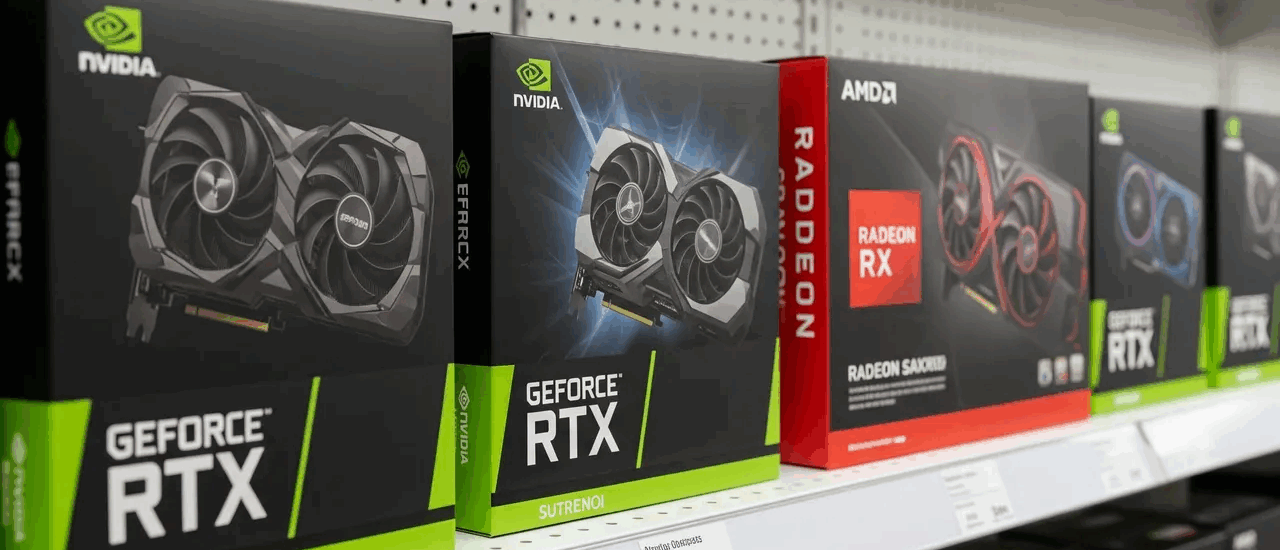
In the rapidly evolving world of machine learning (ML) and large language models (LLMs), Nvidia has long been the gold standard, thanks to its CUDA ecosystem and specialized Tensor Cores. However, the skyrocketing prices of Nvidia’s high-end cards—like the A100 or H100—can make entry into AI development feel like an exclusive club for big tech. As of September 2025, an H100 can cost upwards of $25,000, while even consumer-grade RTX 5090s command a steep $1,999 MSRP (with street prices often exceeding $3,000 due to shortages). Enter AMD: with cards often priced at half or even a third of comparable Nvidia options, AMD’s GPUs offer compelling value for TensorFlow workflows, LLM inference via tools like Ollama, and more. But are they truly viable? This article dives into the research, compares key models (including your suggested Radeon VII and Instinct MI50, plus the new RTX 5090), analyzes pros and cons, and explores other Nvidia alternatives.
AMD GPUs for ML and LLMs: From Legacy to Cutting-Edge
AMD’s lineup spans consumer Radeon cards for hobbyists and Instinct accelerators for enterprise ML. While you mentioned the Radeon VII (launched 2019) and Instinct MI50 (2018), both based on the Vega architecture with 16GB HBM2 memory, these are now legacy products. Current used prices for a Radeon VII range from $500–$800 on secondary markets, and the MI50 fetches $1,000–$2,000. They’re powerful for their era—delivering up to 14.1 TFLOPS FP32 compute—but AMD’s ROCm (Radeon Open Compute) platform, essential for ML acceleration, has shifted focus to newer architectures like RDNA 3 (consumer) and CDNA 3 (datacenter).
For 2025 ML/LLM workloads, AMD recommends:
- Consumer: Radeon RX 7900 XTX (24GB GDDR6, $999 MSRP) – Excellent for local LLM inference, with up to 4.3x speedup in generative AI tasks via optimized ROCm libraries.
- Professional: Instinct MI300X (192GB HBM3, ~$15,000–$20,000) – A datacenter beast rivaling Nvidia’s H200 in LLM fine-tuning, with 2.4x better inference performance per dollar in some benchmarks.
These cards shine in TensorFlow (via ROCm plugins) and PyTorch, supporting distributed training and inference for models up to 70B parameters on a single card.
Compatibility with ML Software: TensorFlow, Ollama, and Beyond
AMD’s ROCm stack has matured significantly by 2025, bridging the gap with Nvidia’s CUDA. TensorFlow officially supports ROCm for AMD GPUs, enabling seamless acceleration on Linux (and WSL2 on Windows). For LLMs, Ollama—a popular tool for running models like Llama 3 locally—now natively supports AMD via ROCm 6.1, covering Radeon RX 7000 series, Radeon Pro W7900, and Instinct MI300X. Users report 100% GPU utilization out-of-the-box on supported cards, even for older models like the RX 7900 XT, though tweaks (e.g., HSA_OVERRIDE_GFX_VERSION for unsupported GPUs) may be needed for Vega-era cards like the Radeon VII.
Caveat: Windows support lags behind Linux, and not all AMD cards are ROCm-certified (e.g., MI50’s Vega support ended with ROCm 5.x). Still, for Ollama inference, AMD delivers 2–4x memory efficiency gains over CPU-only runs, making it ideal for budget-conscious developers.
Head-to-Head Comparison: AMD vs. Nvidia
To quantify the value, here’s a side-by-side of your suggested AMD cards against Nvidia equivalents, now including the flagship RTX 5090 (launched January 2025 on Blackwell architecture with 32GB GDDR7 and 21,760 CUDA cores for superior AI acceleration). Prices reflect 2025 secondary market averages for used/refurbished units where applicable; new MSRPs otherwise. Performance metrics draw from MLPerf benchmarks and inference tests for LLM tasks like Llama 3.1 pre-training.
| GPU Model | Architecture/Memory | Approx. Price (2025) | FP32 TFLOPS (ML Perf.) | LLM Inference Speed (Tokens/sec, 70B Model) | ROCm/CUDA Support | Best For |
| AMD Radeon VII | Vega / 16GB HBM2 | $100–$200 (used) | 13.8 | ~15–20 (limited ROCm) | Partial (ROCm 5.x) | Budget entry-level training |
| AMD Instinct MI50 | Vega / 16GB HBM2 | $150–$250 (used/new) | 13.3 | ~18–25 | Partial (ROCm 5.x) | Small-scale datacenter inference |
| AMD RX 7900 XTX | RDNA 3 / 24GB GDDR6 | $999 (new) | 61 | 45–60 | Full (ROCm 6.1) | Consumer LLM fine-tuning |
| AMD MI300X | CDNA 3 / 192GB HBM3 | $15,000–$20,000 (new) | 163 | 150–200+ | Full (ROCm 6.1) | Enterprise-scale training |
| Nvidia RTX 5090 | Blackwell / 32GB GDDR7 | $1,999–$3,000+ (new) | 82.6 | 80–110 | Full (CUDA 12.x) | Ultimate consumer AI/gaming |
| Nvidia RTX 4090 | Ada Lovelace / 24GB GDDR6X | $1,600 (new) | 83 | 50–70 | Full (CUDA 12.x) | High-end consumer ML |
| Nvidia A100 | Ampere / 40GB HBM2 | $8,000–$15,000 (used) | 19.5 | 30–40 | Full (CUDA 12.x) | Professional training |
| Nvidia H100 | Hopper / 80GB HBM3 | $25,000+ (new) | 67 | 100–150 | Full (CUDA 12.x) | Datacenter LLMs |
*Notes: Prices from eBay/reseller averages; performance varies by framework (e.g., AMD edges out in cost-per-token for inference). The RTX 5090’s extra VRAM and Tensor Cores boost LLM speeds by ~40% over the 4090, but at a 25% higher MSRP. AMD’s newer cards often hit 70–80% of Nvidia’s speed at 50–60% the cost.
Pros and Cons: AMD vs. Nvidia for ML/LLMs
AMD Pros:
- Cost Efficiency: Half to one-third the price for similar VRAM/specs—e.g., RX 7900 XTX vs. RTX 5090 saves ~$1,000 without sacrificing much inference speed.
- Open Ecosystem: ROCm is free and improving, with native Ollama support reducing vendor lock-in. Great for inference-heavy LLM tasks, where AMD claims up to 2x better TCO.
- High VRAM Options: MI300X’s 192GB crushes most Nvidia cards for loading massive models without sharding.
- Power Efficiency: Newer RDNA/CDNA architectures sip less power (e.g., 355W for RX 7900 XTX vs. 575W for RTX 5090).
AMD Cons:
- Software Maturity: CUDA’s decade-long head start means broader library support; ROCm can be finicky on Windows or older cards like Radeon VII.
- Training Lag: Nvidia leads in large-scale training (e.g., RTX 5090’s Blackwell Tensor Cores give a 1.5–2x edge in MLPerf over prior gens), though AMD closes the gap for inference.
- Ecosystem Gaps: Fewer pre-optimized models; expect more setup time for TensorFlow/ROCm.
Nvidia Pros:
- Performance King: Superior in raw speed and features like 5th-gen Tensor Cores on the RTX 5090 for mixed-precision training and DLSS 4 AI upscaling.
- Ubiquitous Support: Every ML tool “just works” with CUDA, from Ollama to Stable Diffusion.
Nvidia Cons:
- Premium Pricing: Inflated costs limit accessibility—the RTX 5090’s $1,999+ tag (often scalped to $3,000–$4,000) is even steeper than the 4090, exacerbating shortages.
- Supply Shortages: Ongoing demand from AI hyperscalers keeps prices high, with RTX 5090 stock vanishing in minutes post-launch.
Overall, AMD wins for cost-sensitive users focused on inference (e.g., running Ollama locally), while Nvidia suits production training—though the 5090’s power draw and price make it overkill for many.
Beyond AMD: Other Nvidia Alternatives
If AMD doesn’t fit, consider these 2025 options:
- Intel Arc GPUs (e.g., B570): Budget-friendly (~$220) with oneAPI for ML, but limited ROCm-like support and lower performance. Best for entry-level TensorFlow experiments.
- Cloud Rentals: Providers like RunPod, Lambda Labs, or CoreWeave offer A100/H100 access at $0.50–$2/hour—ideal for bursty workloads without upfront costs. Google Cloud TPUs provide specialized ML acceleration at competitive rates.
- Apple Silicon (M4/M5): For Mac users, unified memory (up to 128GB) excels in on-device LLMs via MLX framework, though not a discrete “card.”
- Hybrid Setups: Pair AMD CPUs (e.g., Ryzen Threadripper) with GPUs for balanced workstations.
Conclusion: Make the Switch to Smarter Savings
AMD GPUs like the (upgraded) RX 7900 XTX or MI300X deliver 80% of Nvidia’s ML prowess at a fraction of the cost—even against the mighty RTX 5090—with solid Ollama and TensorFlow compatibility on Linux. While legacy picks like Radeon VII and MI50 offer bargain-bin entry points, prioritize ROCm-supported models for future-proofing. If budget trumps all, AMD is your ticket to democratized AI—proving you don’t need Nvidia’s escalating price tag to train tomorrow’s models. Ready to build? Start with ROCm docs and a test Ollama run. Your wallet (and electric bill) will thank you.